Atlantic Corridor / Asturias
Programme

Schedule, cost and critical path

The technical deep-dive of the case: a project-controls (PMO) reading of the Atlantic Corridor in the northwest. Which link blocks UIC-gauge freight, what depends on what, and how schedule and cost are progressing; every figure distinguishes the official data point from our own estimate.

Data as of: 1 Jun 2026

The strategic argument lives in The case

This chapter measures delivery: schedule, cost and dependencies. The European mandate, the economic case and the demands are in The case.

Tracking indicators

Average slippage

6y 12m

Across 10 milestones with a target date

Schedule reliability

30%

3 of 10 on time · 15 re-announcements

Investment execution

91%

€4.3 bn awarded of €4.7 bn · Average award discount: 7%

Critical path: freight in UIC gauge

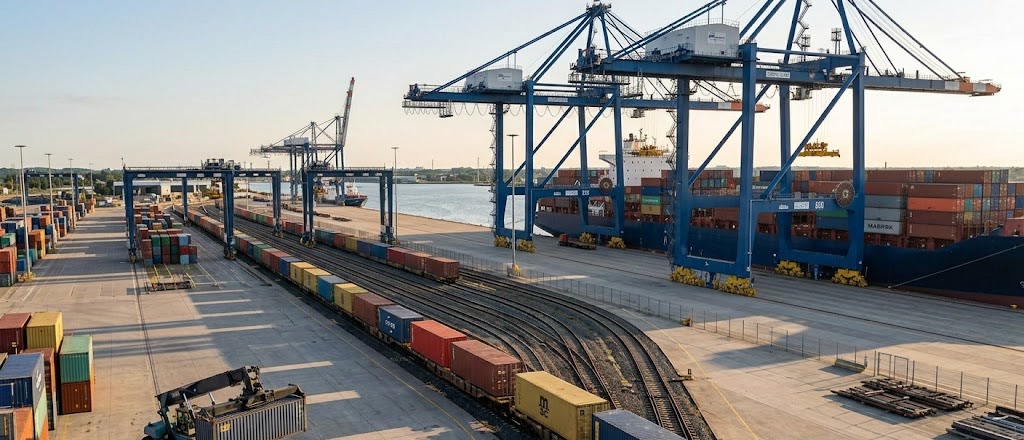
The strategic goal of the Atlantic Corridor is end-to-end international-gauge (UIC) freight traffic. The Pajares Bypass already moves freight —but in Iberian gauge: in 2025 it accounted for 52.5% of its movements, with a +28% year-on-year rise in trains. The leap to European interoperability requires continuous UIC gauge, and that traffic depends on a chain of dependent actions: a single missing piece blocks the goal.

UIC freight blocked by 5 pending actions

Main bottlenecks: Third-rail and ERTMS adaptation of the Pajares Bypass.

The critical path has three valves. The first, León–La Robla, unblocks the Pajares payoff and is near-term (2028–2029), with the caveat of the contract terminated in 2022. The second, line 800 (León–Ponferrada–Monforte, 236 km), is the real ceiling on the schedule: only drafting awarded in 2025 and realistic completion in 2035; it sits on the European comprehensive network (2050), so the right ask is to bring it forward, not to «meet the 2030 deadline». The third, the French border at Dax–Hendaya, lies outside national control and with no horizon, and may neutralise the Spanish effort.

The exit towards the ports runs through the Oviedo junction, oriented north–south —Pajares to the south, Gijón and El Musel to the north. Today it is bypassed by diverting freight along line 154 (Tudela Veguín–Lugo de Llanera), a single-track branch acting as an eastern bypass of Oviedo. It is not a structural solution: its La Grandota tunnel suffered, in 2024, an emergency declaration over serious damage, so the corridor's very port exit rests on fragile infrastructure.

Chain reconstructed by the PMO from public milestones. The % progress is an estimate, not official ADIF data.

Corridor objectives

UIC freight

2/7completed

High-speed passengers

1/2completed

Commuter rail

1/4completed

Port capacity

0/3completed

P400 gauge

0/1completed

Status by lifecycle phase

A rail action goes through informative study → public information → environmental decision → detailed design → tender → award → site handover → construction → acceptance → testing / AESF → commissioning. Only milestones with a modelled lifecycle are counted.

Informative study
1
Public information
1
Detailed design
1
Construction
4
Commissioning
3

Programme risks

Technical / systems

2 actionsHigh

Funding

2 actionsHigh

Geotechnical

1 actionHigh

Expropriations

1 actionHigh

Modifications

1 actionHigh

Coordination with operations

2 actionsMedium

Environmental

1 actionMedium